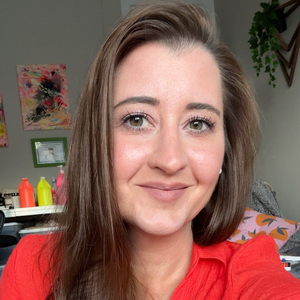
We're more connected than ever, yet somehow we've mastered the art of ignoring each other.

Somewhere between stalking our exes on MySpace and pretending to be professionally fulfilled on LinkedIn, we became a generation of people who know an alarming amount about each other while barely speaking to one another. And because I apparently can't just have a normal hobby, I've decided to make this strange little corner of human behavior the focus of my org psych dissertation.
It's called the lurker economy, and I'm pretty obsessed with it.
Basically, I want to understand why so many of us spend hours consuming other people's lives, opinions, businesses, and creative work online without ever acknowledging we're there. I'm also interested in what all that silent attention means for our relationships, our culture, and the small businesses trying to survive on an internet where 647 people can watch something and approximately four will admit it.
Anyway, I have some thoughts. And now you get to hear them.
First, what the hell is a lurker?
You ever find yourself scrolling through someone's Facebook profile, learning that they got divorced, bought a house, adopted three dogs, and apparently sell essential oils now, only to realize you haven't actually spoken to this person since 2009? Congratulations, you're a lurker. And before you start feeling personally attacked, so am I. Most of us are.
In cyberpsychology, lurking refers to consuming online content without visibly contributing to it. You're watching, reading, and absorbing information, but nobody necessarily knows you're there.
It's not a new phenomenon, although researchers are still figuring out how to measure it and what motivates people to do it.
Stankus and Krishnan (2025) actually developed a scale to measure consistent online lurking, identifying two dimensions involving content consumption preferences and online invisibility. So yes, we've officially reached the point where psychologists are developing instruments to measure how committed we are to minding everyone else's business.
The lurker economy, as I'm exploring it, takes that behavior a little further. I'm interested in the social and economic consequences of all this invisible attention. Because if we're measuring influence, popularity, and business success through visible engagement, what the hell are we missing when most people are just watching?
The internet is basically one giant highschool reunion
Think about how many people you know exclusively through their online activity now. Former coworkers, childhood friends, your cousin's ex-wife, and that one girl from high school who's been posting inspirational quotes about loyalty for seventeen consecutive years. You know who's pregnant, who's getting divorced, who's selling their house, and who has suddenly developed a suspiciously intense passion for financial freedom.
But when was the last time you actually talked to any of them?
We've developed this weird arrangement where we're involved in people's lives without really being involved. We consume their milestones, opinions, vacations, and occasional public meltdowns while maintaining absolutely no responsibility to acknowledge their existence.
And listen…sometimes that's perfectly fine. Not every relationship needs to be maintained, and I certainly don't want to reconnect with everyone I've encountered since the Clinton administration. Some people can remain fond memories, thank you very much.
Still, there's something strange about knowing what someone's kitchen renovation looks like without knowing whether they're doing okay. We've confused access with connection, and I wonder how much that's changed our expectations of friendship and community.
We've got 99 problems and social media is one
Before we start accusing everyone of being antisocial assholes, there's actually some research explaining why people lurk.
Liu et al. (2024) studied 836 social media users and found that factors such as privacy concerns, social comparison, and information overload were associated with lurking through anxiety and social media fatigue. Which shouldn't surprise anyone who has opened Facebook recently.
You log on to see whether your friend's kid won their soccer game and somehow end up reading a 68-comment argument about whether grocery store self-checkouts are destroying America. Then Instagram informs you that your skin is aging, LinkedIn wants you to celebrate someone's promotion to Senior Vice President of Synergistic Nonsense, and TikTok has diagnosed you with a condition you didn't know existed.
It's exhausting. And we're somehow supposed to emerge from that experience feeling inspired to participate?
There's also the issue of being perceived, which I think deserves more attention. Every time you comment publicly, you're potentially opening yourself up to judgment from people who know you, people who think they know you, and complete strangers with suspicious amounts of free time.
Sometimes staying quiet is less about disinterest and more about self-preservation. I respect that. I'm a big believer in having control over our online visibility, and I certainly don't think anyone owes the internet an opinion. But it does make me wonder whether we've made participating so unnecessarily complicated that silence has become the more appealing option.
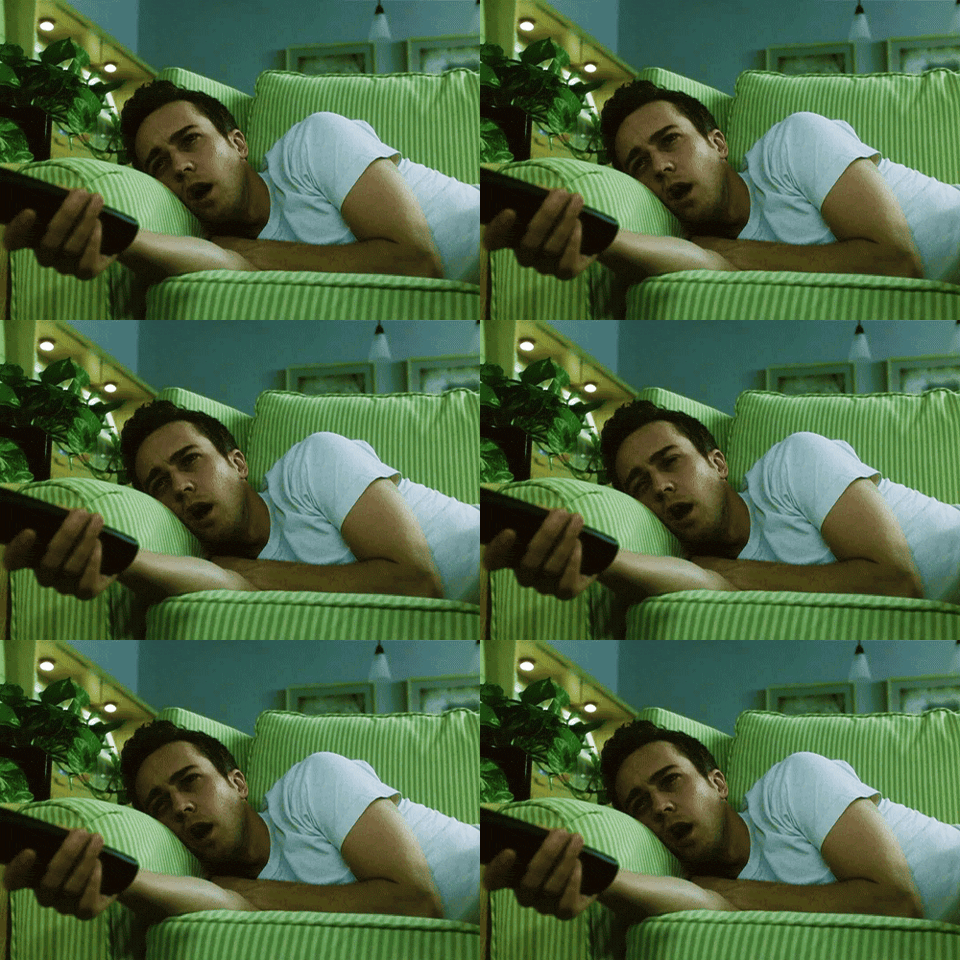
Meanwhile, small businesses are losing their minds
If you've ever owned a small business, created something, or attempted to sell literally ANYTHING online, you already know where I'm going with this.
You spend hours making something. You photograph it in decent lighting, write a caption that doesn't sound like it was generated by a refrigerator, and publish it with the cautious optimism of someone who still believes their hard work might pay off.
Three likes.
One's your mom. One's your best friend. The third is a bot offering to increase your followers for $29.99. Meanwhile, 642 people apparently saw it.
What the shit?
Newsflash, though. Those silent viewers aren't necessarily uninterested. Someone might love your work but have no money right now. Another person might recommend your business to a friend (hello word-of-mouth!). Maybe someone's been following you for two years and is finally getting ready to make a purchase. Or maybe they accidentally opened your story while trying to order DoorDash. We can't know everything!
That's what makes this so interesting from a marketing perspective. We spend an enormous amount of energy measuring likes, shares, comments, and conversions because those numbers give us something tangible to evaluate. But the stuff we can't see matters, too.
I'm not suggesting a lack of engagement is secretly evidence of massive success. Sometimes a post flops because it flops. It happens. But treating visible engagement as the definitive measure of influence seems like a pretty limited way to evaluate human behavior.
And for small businesses operating on tight budgets, that uncertainty can be brutal. They don't have unlimited advertising dollars or an entire department dedicated to convincing strangers to purchase scented candles. Sometimes they're just one exhausted person trying to make something meaningful and pay the electric bill.
A little public support can go a long way. Which brings me to another irritating aspect of how we behave online.
The loudest people aren’t always the majority
Have you ever read a comment section and wondered whether you accidentally wandered into a psychiatric experiment?
Same.
In a 2025 study published in Science Advances, Oswald et al. examined online political discussions involving 520 Reddit users. They found that people who perceived discussions as toxic, disrespectful, or unconstructive were more likely to remain silent. Interestingly, those perceptions were also associated with heavier participation among people who did choose to comment.
So the people who find conversations unpleasant may either withdraw entirely or become some of the most active participants.
That explains a few things.
Consider what happens when the average person reads a controversial post, decides the comment section is an absolute circus, and moves along with their day. The people who remain might be the ones most willing to argue, which can make their perspectives appear more representative than they actually are.
We see 213 angry comments and assume everyone is angry. We see a handful of people aggressively defending an opinion and start wondering whether society has collectively lost its damn mind.
But what about the thousands of people who read the conversation and said absolutely nothing? Their opinions still exist. They're just not part of the visible conversation. And that matters because online discussions influence how we perceive public opinion, social norms, and what other people believe. If we're forming opinions about society based on the loudest participants, we might be getting a pretty distorted picture.
Just kidding. Not might. We will and do.
The internet has essentially given everyone a microphone, and somehow the people who most desperately need to put theirs down are still conducting a three-hour Q&A.
We're connected as hell and lonely as shit
Let's make this even more depressing, shall we?
A March 2026 Los Angeles Times article by Deborah Vankin discussed findings from Cigna's 2025 Loneliness in America report. According to the report, 67% of Gen Z respondents experienced loneliness, compared with 65% of millennials, 60% of Gen X, and 44% of baby boomers.
So apparently my fellow millennials and I are doing an excellent job keeping up with the younger generation in a competition nobody wanted to enter! Woooooooo!
Think about how absurd that is. We can communicate with almost anyone instantly. We can join groups dedicated to obscure hobbies, maintain friendships across continents, and watch complete strangers organize their refrigerators in ways that make us question our own housekeeping abilities.
We have access to more people than ever, yet loneliness remains incredibly common.
Now, I'm not about to claim lurking causes loneliness. It doesn't work that way, and there's no research establishing that connection as a universal truth. Plenty of people find comfort, information, and belonging through observing online spaces without actively participating.
But I can't help wondering whether we've gotten so comfortable watching one another that we've started confusing awareness with relationships. Knowing someone got a promotion doesn't mean you've celebrated with them. Seeing someone's vacation photos doesn't mean you've caught up. And watching a friend publicly struggle doesn't necessarily mean you've checked in.
Maybe it's worth examining how often we mistake being informed about someone's life for actually showing up in it.
For the love of humanity, use your freakin' thumbs
I should probably clarify something before anyone starts accusing me of trying to force social interaction on the entire internet.
I'm not advocating for mandatory participation. Nobody needs to start commenting on everything they see, and I would actually love it if more people practiced the ancient art of keeping their mouth shut. But if you genuinely enjoy someone's content, appreciate their work, or want to see their business succeed, maybe consider acknowledging it occasionally.
Like the post. Leave a thoughtful comment. Share the artwork. Recommend the small business. Send your friend a message telling them the thing they created is freakin’ awesome.
It's not revolutionary. We're not curing anything here. We're just acknowledging that other human beings exist and occasionally deserve to know their efforts aren't disappearing into an enormous online void.
And if you're a business owner or creator, please stop interpreting every quiet post as a personal rejection. Your audience is made up of actual people with complicated lives, limited attention spans, and varying levels of interest in participating publicly. The numbers matter, but they're not the entire story.
The more I explore the lurker economy, the more interested I become in the relationship between attention, participation, and the value we assign to each. I'm curious about what motivates us to stay invisible and whether our collective preference for observing is changing how we understand connection and support.
That's the research side of it, anyway.
The human side is considerably less complicated.
We're all out here trying to make something of our lives, whether that's building a business, creating art, finding meaningful relationships, or just surviving another week without publicly losing our shit.
Maybe the occasional acknowledgment wouldn't hurt.
We've already got our phones in our hands, for crying out loud. Use your freakin' thumbs.
Let's talk about it
Have questions, thoughts, or an observation about the lurker economy? I'd love to hear them. Seriously. This is the kind of stuff I could talk about for hours, much to the delight of absolutely no one in my immediate circle.
You can email me at hi@ashleykesner.com or hit up my DMs on Instagram or LinkedIn.
References
Liu, X., Feng, R., Chen, X., & Yuan, Y. (2024). “Left on read” examining social media users' lurking behavior: An integration of anxiety and social media fatigue. Frontiers in Psychology, 15, 1406895. https://doi.org/10.3389/fpsyg.2024.1406895
Oswald, L., Schulz, W. S., & Lorenz-Spreen, P. (2025). Disentangling participation in online political discussions with a collective field experiment. Science Advances, 11(50), eady8022. https://doi.org/10.1126/sciadv.ady8022
Stankus, A. R., & Krishnan, A. (2025). Illuminating the invisible: Development and psychometric test of a multi-dimensional measure of consistent online lurking (COOL). New Media & Society. Advance online publication. https://doi.org/10.1177/14614448251358488
Vankin, D. (2026, March 25). Gen Z is the loneliest generation. Here's what can help. Los Angeles Times. https://www.latimes.com/lifestyle/story/2026-03-25/gen-z-loneliness-social-media-tips