Because sometimes the healthiest thing you can do is convince yourself the universe has a plan instead of losing your shit.

I have a few favorite mental coping mechanisms, but one of them involves convincing myself that life's minor inconveniences are elaborate attempts by the universe to keep me from something worse. Is there any scientific evidence that the universe gives a shit about my daily schedule? Absolutely not. Does that stop me from entertaining the possibility? Also no.
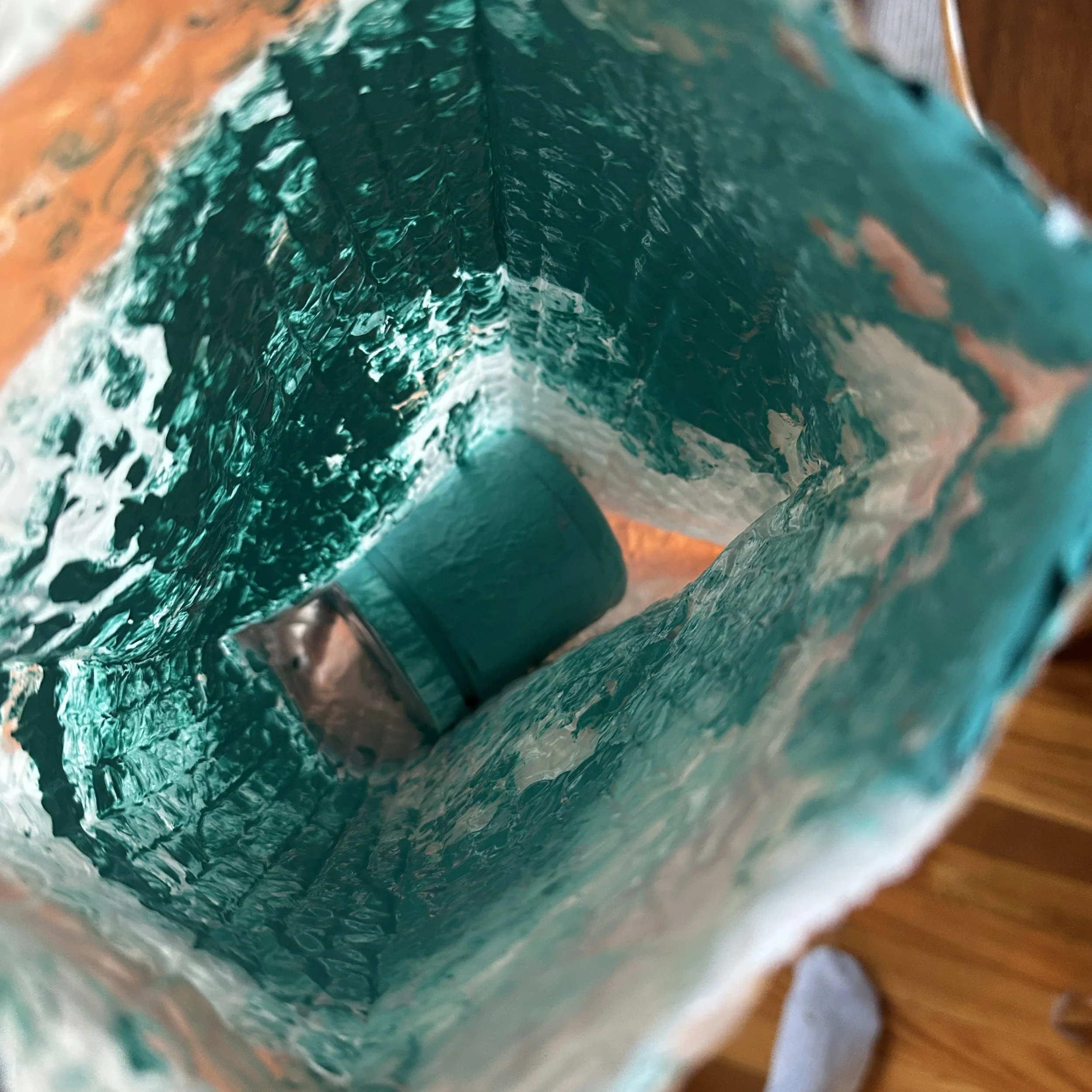
Most recently, I ordered an eight-ounce jar of chalk paint from Amazon for $21. TWENTY-ONE DOLLARS. For eight ounces of paint. I was already questioning my financial judgment, but I had become emotionally attached to the color, which apparently justified spending an absurd amount of money on something I could probably use up in one afternoon.
Anyway, the package arrived, I opened it, and the damn jar had leaked all over the inside. My immediate reaction was to get pissed, but then I remembered the burnt toast theory, started laughing, and kept going with my day.
For all I know, that little disaster saved me from something worse. Maybe the replacement will arrive at exactly the right moment. Maybe I was supposed to be doing something else with my afternoon. Or…. maybe Amazon just needs to figure out how to package a fucking jar.
Either way, I felt better. And that's where the psychology gets interesting.
So, what’s the deal with the toast?
The burnt toast theory became popular on social media around 2023, particularly on TikTok. The idea is that seemingly unfortunate events might be preventing something worse from happening or redirecting us toward something better.
You burn your toast and spend another five minutes making breakfast. Those five minutes might mean you miss a car accident on your commute to work. Your plans get canceled, and you end up having an unexpectedly lovely evening at home. You miss an opportunity and eventually stumble into something you never would have considered otherwise.
Basically, instead of assuming the universe is personally out to ruin your Tuesday, you entertain the possibility that the inconvenience might be working in your favor.
A 2026 article from HB Mag describes it as a mindset rather than a scientifically established theory, connecting its appeal to our tendency to search for meaning in uncertain situations.
And humans absolutely love finding meaning in things. We'll analyze a three-word text message for forty minutes, convince ourselves a song coming on the radio is a sign, and develop an entire theory about why somebody watched our Instagram story but didn't like our post. Honestly, believing a burnt piece of bread might have saved your life doesn't seem that unreasonable when you consider the other ridiculous shit our brains come up with.
Your brain loves a good plot twist
Here's the part I enjoy from a psychological perspective: the burnt toast theory has a lot in common with cognitive reappraisal.
Cognitive reappraisal is an emotional regulation strategy that involves changing how we interpret a situation to influence how we feel about it. The event itself hasn't changed. We're just approaching it with a different perspective.
And unlike my theory that a leaking jar of chalk paint was part of some grand cosmic itinerary, cognitive reappraisal has been studied.
In a 2025 study published in Emotion, researchers Christian Waugh, Marquis Schieber, and Yifang Zhao investigated how people identify positive elements within predominantly negative experiences. Across several studies, participants who generated positive appraisals reported improvements in how they felt about stressful situations.
The researchers also found that focusing on genuinely positive aspects of an experience could sometimes be more effective than trying to convince ourselves that the entire negative experience was somehow positive.
Which makes sense, because there's a big difference between finding something good in a shitty situation and pretending the situation wasn't shitty to begin with.
My paint leaking everywhere was annoying. I don't need to convince myself otherwise. But being able to find something funny about it, even if that humor comes from imagining an alternate timeline (hello, quantum physics) where my $21 paint catastrophe saved me from some unknown disaster, changes how much emotional energy I'm willing to spend on it.
The package is still a mess. I'm just not joining it.

Not everything needs a silver lining
Now, before we start attributing every inconvenience to divine intervention, we should probably acknowledge that sometimes shitty things happen because shitty things happen.
There's no evidence that burning your toast prevents car accidents, that a delayed flight means you've narrowly escaped disaster, or that the universe personally intervened when someone canceled your plans.
An August 2026 article from Acibadem Health Point discusses how reframing everyday setbacks may help prevent one frustrating moment from influencing the rest of your day. But it also emphasizes that acknowledging disappointment matters.
And I agree.
There's a difference between using optimism to cope and using optimism to avoid dealing with reality. If someone experiences a genuine loss, telling them everything happens for a reason can be spectacularly unhelpful. Sometimes people need support, not an unsolicited explanation of the universe's alleged business plan.
I also think we've gotten a little carried away with turning every negative experience into some mandatory personal growth assignment. Not every disappointment needs to become a lesson. Sometimes you can just be disappointed, complain to a friend, eat something good, and carry on with your existence without extracting a life-changing revelation from the experience.
The burnt toast theory works best for me when it's an invitation to consider another possibility, not a demand to find meaning where there might not be any.
Maybe the point isn’t the point
One of the more useful things I've learned about human behavior is how much attention we devote to things we can’t control.
We'll replay conversations, imagine alternate outcomes, and spend an impressive amount of time mentally arguing with circumstances that have already happened. As if thinking about something for another three hours is going to convince the past to reconsider its decisions.
The burnt toast theory gives me something else to do with that energy.
Instead of assuming an inconvenience has ruined something, I can acknowledge that I have absolutely no idea how things would have unfolded differently. That's the part I find comforting. Not necessarily believing something better is coming, but accepting that I don't have enough information to declare the current situation a disaster.
It also gives me permission to laugh, which might be my favorite part of the entire thing!
I'm not suggesting anyone abandon critical thinking in favor of believing their toaster has supernatural abilities. I'm just saying that when something relatively insignificant goes wrong, we don't always have to respond like we've been personally betrayed by the entire universe.
Maybe the delay helped. Maybe the cancellation opened another opportunity. Maybe the $21 jar of paint was packaged by someone who has never encountered the concept of a lid. Who the hell knows?
But I've spent enough of my life getting worked up over things I couldn't change, and I'd rather not donate any more of my limited time on this planet to being personally victimized by craft supplies. So, until proven otherwise, I'm choosing to believe the universe occasionally has my back.
Even if its customer service department is absolute shit.
References
Acibadem Health Point. (2026, August 18). Burnt toast theory: Meaning and mental health perspective. https://www.acibademhealthpoint.com/blog/burnt-toast-theory/
HB Mag Health Research Team. (2026, August 12). What is the burnt toast theory? What you need to know. HB Mag. https://hbmag.com/what-is-the-burnt-toast-theory-what-you-need-to-know/
Waugh, C. E., Schieber, M., & Zhao, Y. (2025). Feeling good about the bad: Making positive appraisals of predominantly negative stressors. Emotion, 25(6), 1381–1399. https://doi.org/10.1037/emo0001517